🌿 Every thriving garden is built on habitats, not just plants.
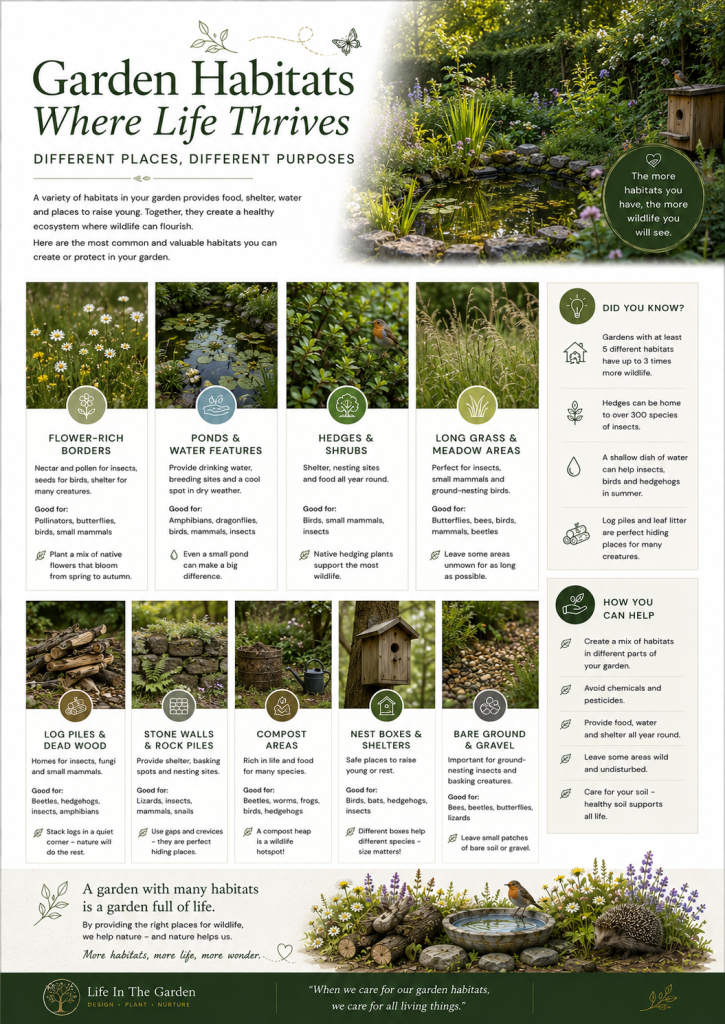
A wildlife-friendly garden is much more than a collection of flowers. Every feature provides a different purpose, creating a network of habitats that supports birds, mammals, insects, amphibians and countless other species.
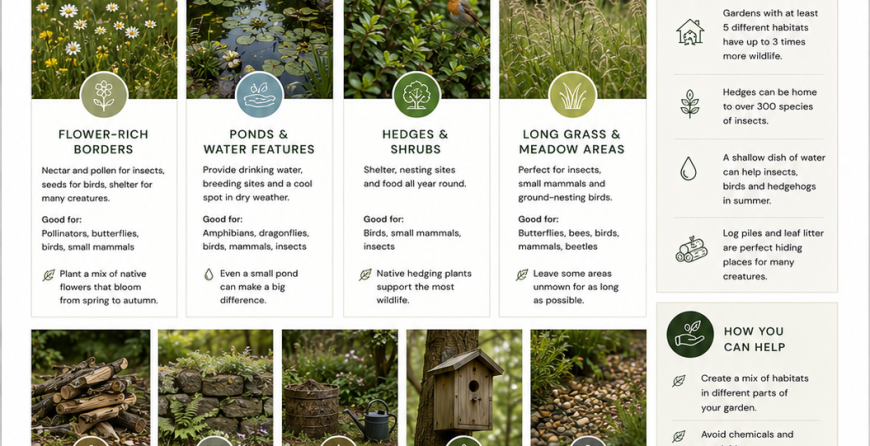
🪻 Flower-rich borders provide nectar and pollen for pollinators.
💧 Ponds become home to frogs, newts, dragonflies and provide drinking water for birds and mammals.
🌳 Native hedges and shrubs offer food, shelter and safe nesting sites throughout the year.
🌾 Long grass and wildflower meadows are essential for butterflies, bees, grasshoppers and many ground-dwelling creatures.
🪵 Log piles and dead wood create miniature ecosystems where fungi, beetles and hedgehogs can thrive.
🪨 Stone walls and rock piles provide warm basking spots and hiding places for insects, reptiles and small mammals.
♻️ Compost heaps are alive with worms, beetles, fungi and microorganisms that recycle nutrients back into the soil.
🐦 Bird boxes, bug hotels and small areas of bare ground offer nesting opportunities for species that increasingly struggle to find suitable habitats in modern gardens.
The secret isn’t creating one perfect feature—it’s creating many different habitats that work together.
Nature is incredibly resilient. Give wildlife food, water, shelter and space, and it will often find its way back.
At Life In The Garden, we believe that every garden—large or small—has the potential to become a thriving ecosystem.
More habitats. More wildlife. More life. 🌱🦋🐦🐝🦔