For generations, British gardens have been designed around a climate that could usually be relied upon: regular rainfall, mild summers and cool winters. Today, that climate is changing.
Across Essex and the wider South East of England, many homeowners have already noticed the signs. Lawns turn brown earlier in summer. Clay soils crack after prolonged dry spells. Wildlife becomes harder to spot. Garden plants require more watering than they did only a decade ago.
These observations are not simply isolated weather events. They are consistent with long-term climate projections produced by the UK Met Office.
What the Science Tells Us
According to the UK Climate Projections (UKCP), the UK is expected to experience:
- hotter and drier summers,
- warmer and wetter winters,
- more frequent heatwaves,
- and an increase in extreme weather events.
Under the high-emissions scenario used by the Met Office, by around 2070:
- average summer temperatures could be 1–6°C warmer,
- summer rainfall could decrease by up to 60% in some regions,
- winter rainfall could increase by up to 30%.
Importantly, this does not mean that every summer will be dry or every winter wet. British weather will remain highly variable.
Instead, the overall trend is clear:
more rain will fall during winter, while summers will become increasingly prone to drought.
Why This Matters in Essex
Essex is already one of the driest counties in the United Kingdom.
Most Atlantic weather systems lose much of their moisture over western Britain before reaching East Anglia. As a result, Essex receives considerably less annual rainfall than many western counties.
During prolonged periods of high pressure, which climate models suggest may become more common during summer, evaporation greatly exceeds rainfall. The result is familiar to many gardeners:
- dry, compacted soils,
- stressed lawns,
- struggling newly planted shrubs,
- declining pond levels,
- reduced insect activity,
- and increased pressure on wildlife.
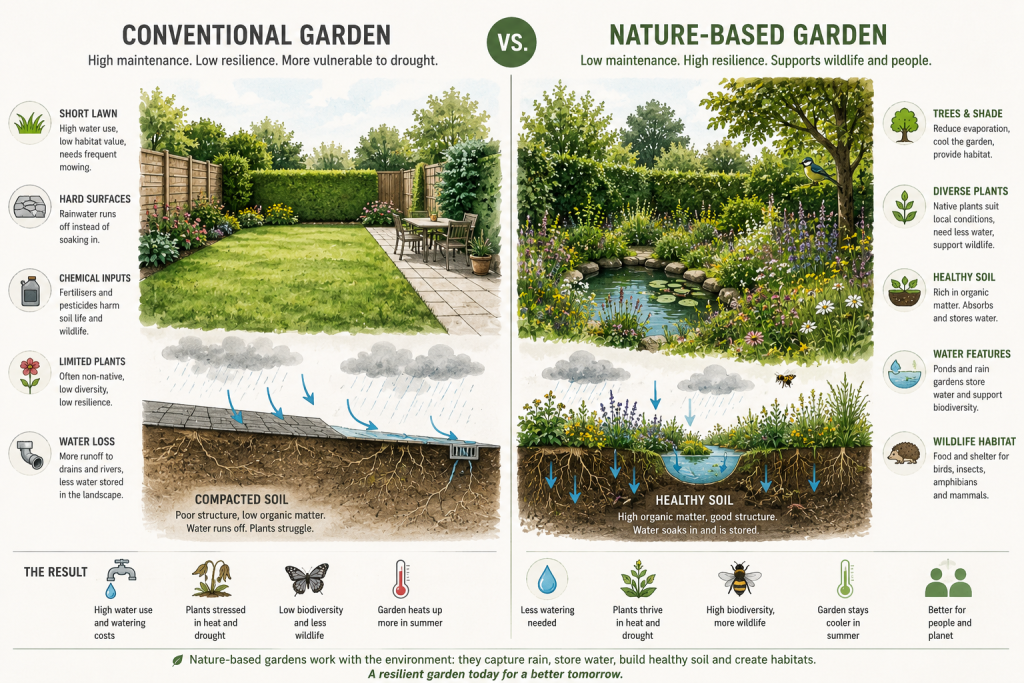
Even when heavy rain finally arrives, much of it simply runs off hardened ground instead of soaking into the soil.
This creates an unfortunate paradox:
more intense rainfall, yet less water available when plants actually need it.
Gardens Can Become Natural Water Reservoirs
Traditional gardening often focuses on appearance.
The gardens of the future must also manage water.
Healthy soils rich in organic matter act like giant sponges. Deep-rooted trees and shrubs improve soil structure, allowing rainfall to penetrate instead of running away. Native hedgerows reduce drying winds and create cooler microclimates. Even small ponds store water, increase humidity and support hundreds of species.
Every one of these features helps slow the movement of water through the landscape.
Rather than allowing winter rainfall to disappear rapidly into drains and rivers, well-designed gardens keep more water where it is needed during summer.
Wildlife Is Part of the Solution
Many people think of wildlife as something that benefits from gardens.
Increasingly, science shows that wildlife also helps gardens function better.
Pollinating insects improve flowering and fruit production.
Earthworms continuously aerate the soil.
Fungi transport water and nutrients through underground networks.
Birds and amphibians naturally control pests.
Diverse plant communities create shade, reduce evaporation and improve soil health.
A garden rich in biodiversity is usually far more resilient during drought than one consisting of a short lawn surrounded by ornamental planting.
Small Changes Can Have Big Effects
Climate adaptation does not require large estates or expensive landscaping.
Even relatively small gardens can make a meaningful difference by introducing features such as:
- wildlife ponds,
- native hedgerows,
- drought-tolerant planting,
- shade trees,
- wildflower areas,
- rain gardens,
- compost-rich soils,
- and reduced areas of hard paving.
Individually these changes may seem modest.
Across an entire neighbourhood, however, they begin to reconnect habitats, improve water retention and reduce summer temperatures.
Our Vision at Life In The Garden Ltd
At Life In The Garden Ltd, we believe gardening is entering a new era.
Beautiful gardens will always matter—but beauty alone is no longer enough.
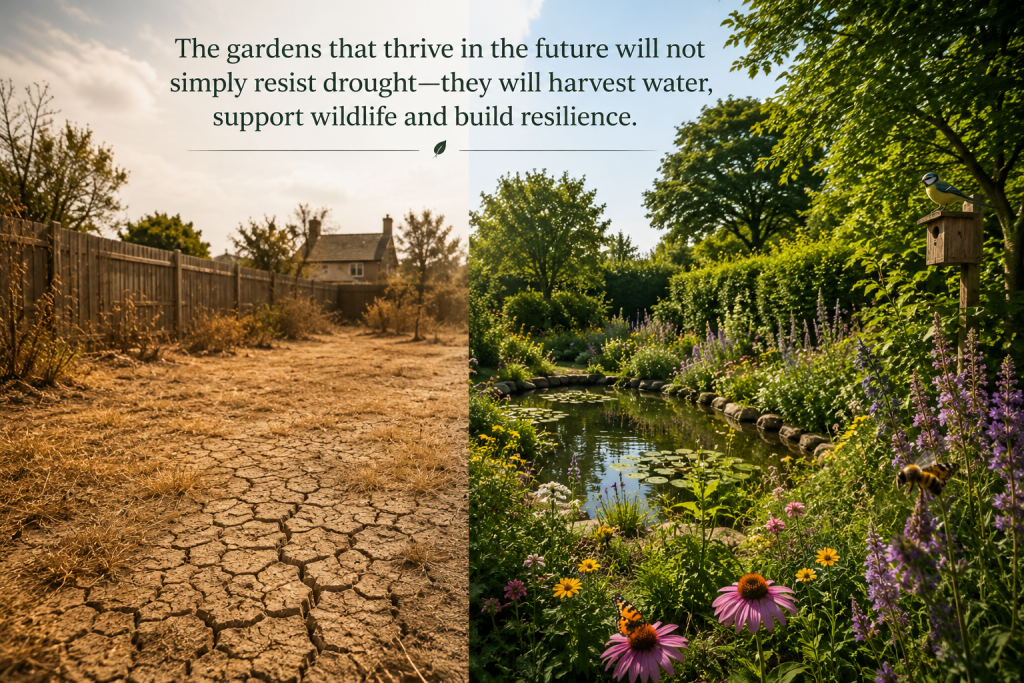
The gardens that thrive over the coming decades will be those designed to work with nature rather than against it.
Our goal is to create landscapes that are attractive, practical and resilient—places where people enjoy spending time, while also supporting birds, pollinators, amphibians and countless other species.
As our climate changes, every garden has the potential to become part of the solution.
By restoring habitats, planting trees and hedgerows, improving soils and creating spaces that retain water naturally, we can help build landscapes that remain healthy, vibrant and full of life for generations to come.
References
- Met Office – UK Climate Change
- UK Climate Projections (UKCP)
- Met Office – Effects of Climate Change
- UK Climate Projections – Headline Findings