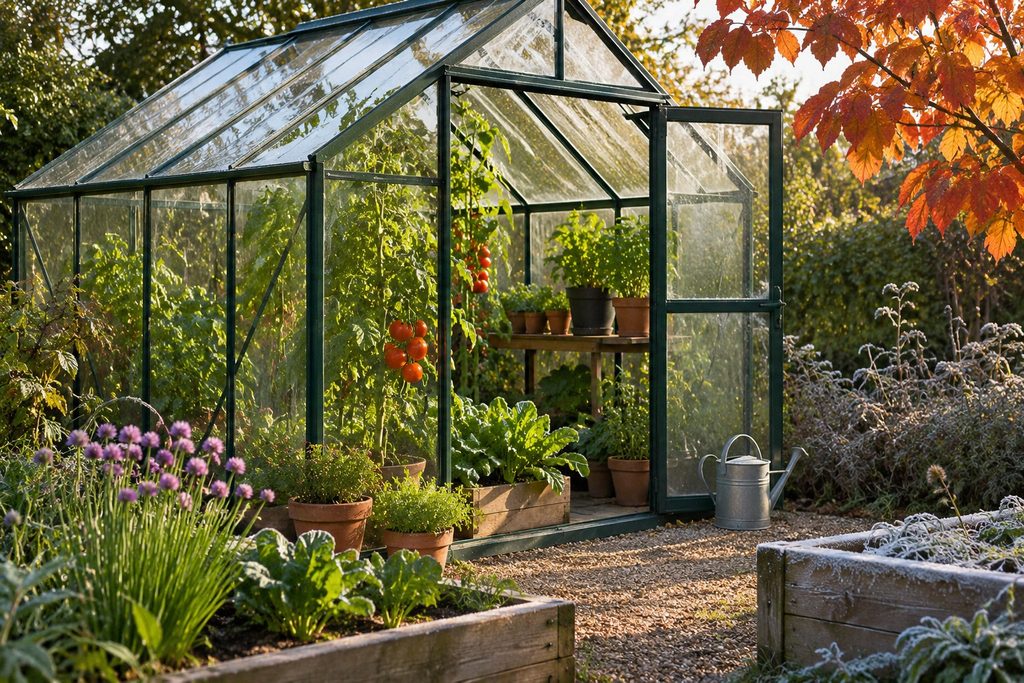
One of the greatest advantages of having a greenhouse in your garden is the ability to extend the growing season. In the British climate, where unpredictable spring temperatures, early autumn frosts and prolonged periods of rain can limit what we grow outdoors, a greenhouse creates a more protected and controllable growing environment.
Whether you enjoy growing your own vegetables, raising plants from seed or experimenting with more exotic varieties, a greenhouse can transform the way you use your garden throughout the year.
Heated or Unheated Greenhouse – What Is the Difference?
Before exploring the benefits, it is important to distinguish between heated and unheated greenhouses, as they offer very different growing conditions.
An unheated greenhouse relies primarily on solar energy. Sunlight warms the soil, plants and internal surfaces during the day, creating a warmer environment than the garden outside. It also provides protection from wind, excessive rainfall and some light frosts.
Although temperatures can still fall below freezing overnight, an unheated greenhouse can extend the growing season by several weeks at either end of the traditional outdoor growing season, and considerably longer for certain hardy crops.
A heated greenhouse, on the other hand, allows gardeners to maintain a minimum temperature regardless of the weather outside. Depending on the level of heating, insulation and available light, it can provide suitable growing conditions throughout much of the year, including winter.
However, heating comes with additional running costs, and for many gardeners, an unheated greenhouse offers an excellent balance between productivity, sustainability and affordability.
Getting a Head Start in Spring
Perhaps the most valuable benefit of a greenhouse is the opportunity to begin growing earlier in the year.
While the garden outside may still be cold, wet and unsuitable for sowing, temperatures inside a greenhouse can become surprisingly pleasant on sunny days, even in February.
An unheated greenhouse can be used to start a variety of hardy crops, including:
- Lettuce and other salad leaves
- Spinach
- Radishes
- Broad beans
- Peas
- Spring onions
- Early carrots
It also provides an excellent environment for raising young plants before transplanting them into the garden once outdoor conditions become more favourable.
With additional heating or a heated propagator, gardeners can start more temperature-sensitive plants, such as tomatoes, peppers, chillies and aubergines, much earlier in the year.
This head start can result in earlier harvests and a longer, more productive growing season.
Making the Most of Summer
During summer, a greenhouse provides the warmer and more sheltered conditions required by many crops that can struggle to reach their full potential outdoors in the UK.
Tomatoes, cucumbers, peppers, aubergines, chillies and even melons can benefit enormously from this protected environment.
Greenhouses also protect plants from heavy rainfall and strong winds, giving gardeners greater control over watering and growing conditions.
However, good ventilation and adequate watering are essential, as temperatures inside a greenhouse can rise rapidly during sunny summer days.
Extending the Growing Season into Autumn
As autumn arrives and outdoor temperatures begin to fall, a greenhouse continues to provide valuable protection.
Tomatoes and peppers may continue producing into October, or occasionally November in particularly mild conditions. Meanwhile, cooler-season vegetables can be sown in late summer and early autumn to provide fresh produce long after many outdoor crops have finished.
Suitable autumn crops include:
- Winter lettuce
- Spinach
- Rocket
- Lamb’s lettuce
- Pak choi
- Mizuna
- Radishes
- Winter purslane
In southern England, a well-managed unheated greenhouse can extend the productive growing season from late winter or early spring well into November, depending on the crops and weather conditions.
Can You Grow Vegetables Throughout Winter?
Even without heating, a greenhouse can remain useful throughout the winter months.
Cold-tolerant vegetables such as spinach, winter lettuce, kale and lamb’s lettuce can survive low temperatures and provide occasional harvests during mild periods.
The secret to successful winter harvesting is often to establish plants during late summer or early autumn, allowing them to develop before temperatures and daylight levels decrease significantly.
It is important to understand that temperature is not the only limiting factor. During December and January, shorter days and weaker sunlight naturally slow plant growth, even inside a heated greenhouse.
A heated greenhouse can protect plants from frost and maintain more favourable temperatures, but supplementary lighting may also be necessary if the aim is to achieve vigorous growth and consistent production throughout the darkest months of the year.
How Much Longer Can Your Growing Season Be?
In the South East of England, an unheated greenhouse can potentially add two to three months to the growing season for suitable crops, compared with growing them outdoors without protection.
With careful crop selection, good timing and additional frost protection when necessary, it is even possible to harvest certain vegetables throughout the year.
A heated greenhouse offers greater flexibility, potentially allowing year-round cultivation, although the results depend on the temperature maintained, available light and the types of plants being grown.
Creating a More Productive Garden
A greenhouse is much more than a structure for growing tomatoes. It creates opportunities to experiment, propagate plants, grow your own food and enjoy gardening during months when outdoor activity would otherwise be limited.
By combining a greenhouse with raised vegetable beds, composting facilities, rainwater harvesting and wildlife-friendly planting, you can create a garden that is both productive and environmentally conscious.
At Life In The Garden Ltd, we believe that gardens should be more than beautiful outdoor spaces. They should be living, productive environments that encourage us to connect with nature throughout the year.
A thoughtfully positioned greenhouse can become an integral part of such a garden, bringing new possibilities to every season.